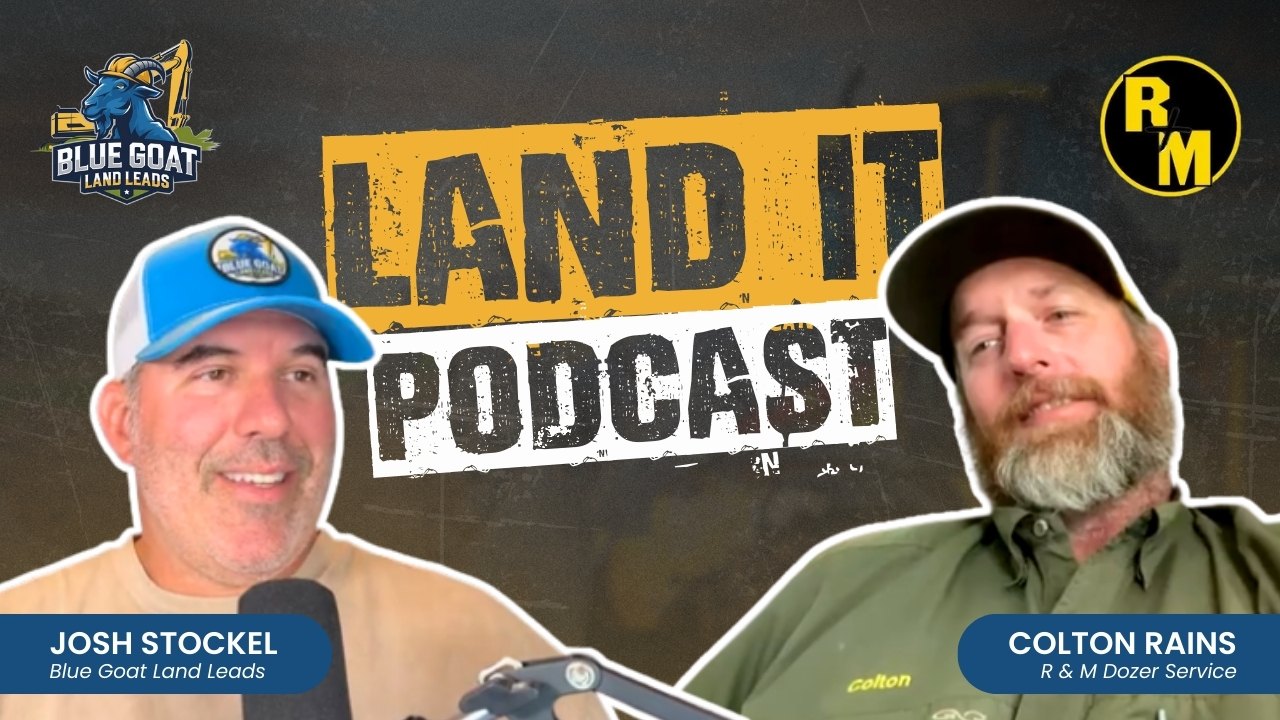
A dozer side project becomes a company
Rains says the work began alongside ranch employment, with a dozer intended to pay for itself. He describes later narrowing the operation to himself and one dependable coworker rather than maintaining a larger crew through uncertain workloads.
Building ponds starts below the surface
He enjoys pond work and describes walking the site, digging test holes and finding suitable clay before estimating the job. His examples explain that a pond may need a substantial compacted clay liner or imported material when local ground will not hold water reliably.
Play episode 05.
Rent the machine when the work calls for it
Rains rents specialized machines and mulching attachments instead of buying tools he rarely uses. When a rental is needed for longer, he looks for other jobs that can put it to work during the rental period.
Show the work and protect cash
Short job videos help prospects see completed work, while repeat ranch customers often phase clearing over multiple visits. Rains urges new operators to start slowly, remain professional and keep money available for inevitable machine repairs.
A ranch can be a sequence of projects
Rains says some landowners return over successive years because clearing an entire large property at once would be expensive. One family has called him for brush, a road and access toward a creek across related properties rather than commissioning every task as a single contract. That phased work depends on knowing what the owner wants now and what can wait. He also recounts a client who became upset when Rains advanced to another item on a written list without checking in first. The contrast is useful: a repeat relationship does not remove the need to agree when each phase begins, how progress will be communicated and what falls within today's authorization.
See the full conversation.
How Rains discusses money before mobilizing
For ordinary jobs, Rains says he generally prefers to start work before collecting payment because new customers may worry about contractors who take money and never arrive. He describes a different approach on a large solar-farm assignment that needed upfront resources to get moving. These are examples from his own practice, not a payment rule for other contractors or a recommended contract term. They show why a small clearing job and a capital-intensive project may require different cash arrangements. The owner needs to account for mobilization and time on site while making the customer's expectations clear; trust built through earlier jobs makes those discussions easier in his account.
Rain and soil conditions disrupt a tidy calendar
Rains describes projects arriving together after a wet stretch ended, including work that had been delayed by rain. On one tank-cleanout job, he says water had to be pumped out repeatedly because more rain came. When separate jobs overlap, the dependable coworker he kept and another operator can help watch different sites, but he does not portray this as an endlessly expandable crew. He also says that the same season of the year can be slow or extremely busy depending on customer decisions. Scheduling dirt work therefore means keeping some flexibility for weather and supervision, rather than assuming every estimate can turn into machine hours on the originally imagined date.
Ideas to take back to the work
- Pond estimates depend on site investigation and soil, not simply acreage.
- Renting specialized equipment can match costs to the jobs actually booked.
- Visible work, repeat relationships and repair reserves all matter to a small dirt-work operation.
Questions from this conversation
What kind of work does Colton most enjoy?
He says pond building is his favorite among the work discussed.
Why does he rent a mulching head?
He says he does not mulch every day and prefers not to tie up money or wear his own equipment for occasional jobs.
What is his advice to a new contractor?
Test the market gradually, avoid a financial bind, stay professional and save for equipment failures.
Can ranch clearing be completed in phases?
Yes, in the examples Rains gives, some landowners budget for one portion of clearing and bring him back for later work. He also recalls a dispute over starting a later item on a customer's list without first calling. The episode points to clear authorization and communication for each phase.
Does Rains always require an upfront deposit?
No. He says he often starts ordinary work without advance payment because he understands customer concerns about contractors not showing up. A large solar-farm job was different: he needed money upfront for preparation. His account describes case-by-case practice, not a blanket deposit policy for all jobs.