
From rented equipment to a dedicated mulcher
Noah and Robert describe starting with rentals, then buying a skid steer for selective clearing before moving toward a machine better suited to forestry mulching. They weigh dealer service and warranty coverage against downtime when choosing equipment.
Build a day rate from the actual cost to run
Their pricing approach starts with operator pay, fuel, grease, filters, scheduled maintenance and eventual repairs, reduced to an operating cost per day. They then add a margin that can support the company rather than merely paying the owners.
Play episode 09.
Protect the estimate against hidden job costs
They identify forestry mulching as a strong service for their small crew but warn that demolition with haul-off can exceed the projected number of dumpsters. The contract should make clear how additional haul-off will be handled.
Keep the machine working and the pipeline moving
The discussion covers spare hydraulic hoses, fueling and tools for a thrown track as practical ways to reduce avoidable downtime. The owners also discuss their experience with purchased leads versus marketing under their own brand and their interest in more commercial bids.
Accurate billing was part of the reason to start Bad Hog
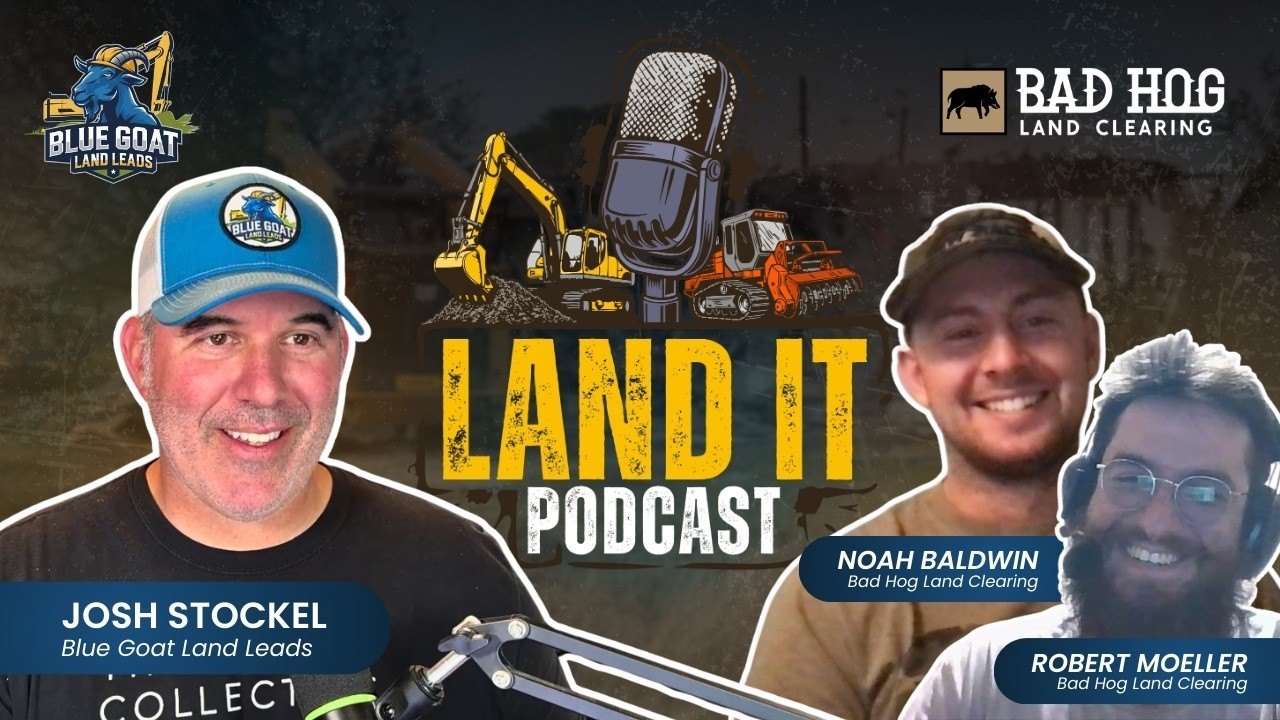
Noah and Robert met while working for another contractor. In their account, the hours they recorded on jobs did not always match what customers were billed, leaving the crew to field questions they could not answer. That experience helped push them to build their own company around a different standard: if work slows down, the owner should find more work rather than pass an unrelated business problem to a customer. They connect that principle to estimates, too. Even when an older machine meant longer days and more physical effort, they preferred to fulfill the agreed scope rather than return to the client simply because they had underestimated their own time.
See the full conversation.
Rocky terrain changes both production and machine wear
A parcel's acreage does not tell the whole pricing story in Central Texas. The Bad Hog owners describe walking properties where shallow soil and sharp rock make a fine mulch finish harder to achieve and shorten the life of teeth and tracks. A customer asking for a particular finished appearance may therefore be asking for more machine time on a site that is also more expensive to traverse. They discuss adding a charge when work means spending the day driving over rock, a cost they say they did not fully appreciate on earlier grapple jobs. Their point is to connect the quoted scope and desired finish to actual ground conditions before promising a standard production rate.
The next growth constraint may be the phone, not the machine
As a two-person crew, Bad Hog can have a productive machine on site while still losing operating time to incoming calls. Robert describes having to stop work and shut down the machine to answer a potential customer's inquiry. The partners have used subcontractors but are cautious about adding a full-time employee before the workload justifies one; they also consider what a larger commercial scope would demand of their capacity. Their discussion makes hiring a scheduling and service question, not merely a revenue milestone. Can they keep current jobs moving, answer new prospects promptly and deliver a bigger contract without compromising the standards that brought customers to them?
Ideas to take back to the work
- Calculate machine-and-operator cost from consumables and future maintenance, not a competitor's arbitrary day rate.
- Explain the work a capable mulcher can complete in a day when a prospect reacts to the price.
- Allow explicitly for uncertain haul-off quantities on demolition jobs.
Questions from this conversation
How do Bad Hog's owners calculate a forestry mulching day rate?
They itemize machine operation, labor, fuel, grease, filters and scheduled service into a daily hard cost, then add profit and money to reinvest in the business.
Why did dealer support matter when selecting a mulching machine?
They expect equipment failures and value warranty coverage and field service because a machine out of action also stops revenue-producing work.
What can make a demolition estimate lose money?
If haul-off takes more dumpsters than estimated, a contractor may absorb that extra expense unless the possibility and payment arrangement were made clear beforehand.
Why do Bad Hog's owners emphasize accurate customer billing?
They say a prior employer billed customers for hours that did not match the crew's recorded work, and the crew was left facing customer questions. Starting Bad Hog gave Noah and Robert a chance to set their own expectations: bill for the work performed and solve the company's cash-flow problems through new work, not questionable charges.
What site conditions can change Bad Hog's mulching estimate?
The owners specifically discuss rocky ground, shallow soil, terrain and the finish a customer expects. Rock can slow progress and wear teeth and tracks, especially when a fine mulch result is requested. They say some particularly rocky work merits an additional charge rather than assuming every acre takes the same time and consumables.