
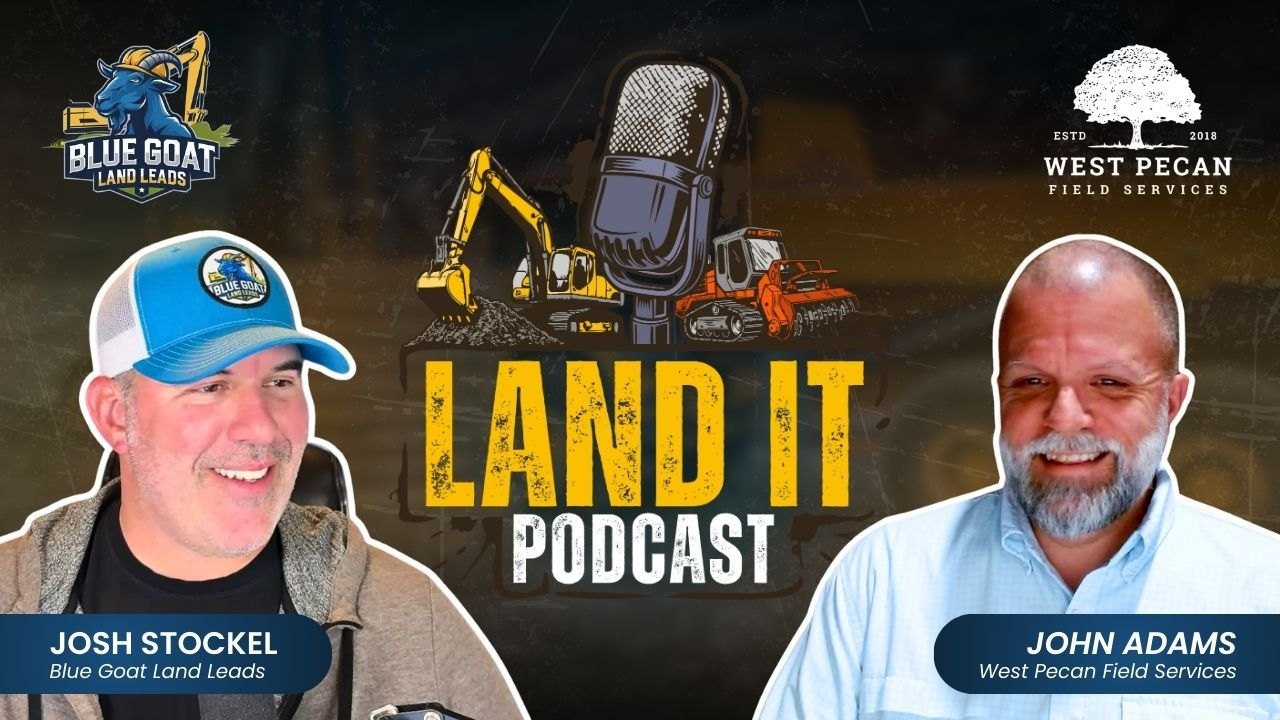
An outside view of hidden contractor risk
Adams says his firm works in insurance loss control, ongoing risk management and related inspections or support. He argues that an outside observer can catch habits that production-focused crews have normalized.
Small oversights with large consequences
He points to poor housekeeping, deferred equipment issues, utility strikes, backing incidents and inadequate fire buffers as avoidable sources of damage, downtime or claims. The discussion frames prevention as protecting margin, not just meeting a safety formality.
Play episode 08.
Document conditions and controls
Adams recommends dated, location-aware photos and consistent equipment and site records so a contractor can demonstrate what was inspected and what condition existed before work. He distinguishes broad safety practices from a site-specific plan adapted to dry conditions or other local exposures.
Prepare before renewals and bigger bids
He says weak records and repeatable incidents can affect insurance conversations and eligibility for larger contracts. His suggested moments for outside review are before an insurance renewal, before bidding larger work or when documentation is not yet credible.
Read the exclusions before assuming a policy covers the job
Josh raises the contractor's temptation to buy a stated amount of liability coverage and assume the problem is solved. Adams answers by describing how West Pecan interprets insurance language, including exclusions, in terms of the actual work a contractor is about to do. A land-clearing job for a development may create exposures that the headline policy limit alone does not explain. He also says contractors often focus on fleet size or years in business when discussing premiums, while repeated loss patterns, maintenance and demonstrated controls matter in an underwriter's assessment. This is an argument for understanding the specific policy and operation, not a promise of coverage or a particular premium outcome.
See the full conversation.
Loss runs show patterns, not just isolated bad days
Adams explains loss runs as an insurer-facing history of claims. A series of similar backing incidents, equipment damage or utility strikes tells a different story from one unusual event: it suggests a recurring condition that a contractor has not controlled. He links that history to conversations about pricing and even coverage availability, as well as qualification for larger jobs with demanding records. His point is not that one photograph can erase a claim. It is that a company should spot repeatable failures, change the practice causing them and be able to demonstrate the response. Otherwise a rushed job today can remain visible in future insurance and bid reviews.
Assign the inspection record to a real person
As Josh asks how a multi-crew contractor could keep up with site and equipment records, Adams moves from an owner-only habit to field accountability. A crew leader or designated person can capture pre- and post-use checks, site conditions and toolbox discussions on a phone or tablet, while someone in the company receives and reviews them. If documentation is everyone's job in name but nobody's assigned task, it is easy for the record to disappear. The test Adams gives is operational: if an insurer asked tomorrow for the company's controls, could it produce written evidence? Apps make collection easier, but they do not replace the person responsible for doing the check.
Ideas to take back to the work
- Prevention includes equipment upkeep, site housekeeping and utility and fire precautions.
- Documentation gives a contractor evidence of inspections and preexisting conditions.
- The episode does not establish a guaranteed premium saving from any single measure.
Questions from this conversation
What does West Pecan Field Services do?
Adams describes insurance loss-control inspections and longer-term risk-management support such as safety, crisis planning and compliance assistance.
Which single habit does Adams especially emphasize?
Documenting inspections and site conditions so contractors can show what they did before an incident or insurance review.
When does he recommend seeking a risk review?
Before insurance renewal, before a major contract bid, while scaling into more demanding work or when records are weak.
What is a loss run in the insurance discussion?
Adams describes loss runs as a company's history of insurance losses or claims, reviewed for patterns. Repeated similar incidents can signal that an exposure was not corrected. He links the record to underwriting and larger-contract readiness, but does not give a fixed premium formula for any contractor.
Who should collect safety records when a contractor has multiple crews?
Adams suggests clear field ownership, such as a crew leader or designated person recording inspections and site conditions, with someone responsible for receiving the records. He discusses phone- or tablet-based tools, but the central requirement is accountability: the company should be able to show its controls in writing when asked.