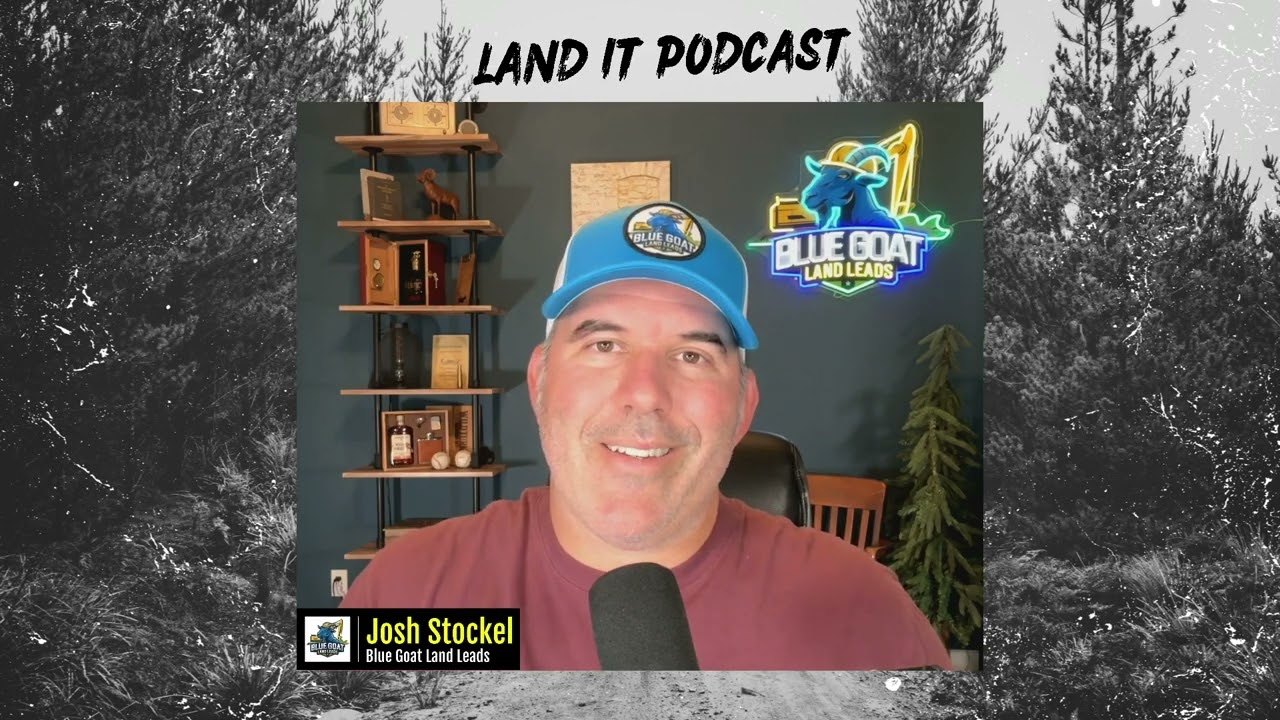
Why Josh started Land It
Josh Stockel says he wanted a resource he wished he had when building businesses: candid insight into operations, marketing, hiring and the next stage of growth. The show is meant to bring working owners into those conversations.
Who the show is for
Land-clearing, excavation and demolition contractors are the core audience, including owners operating tractors or skid steers. Josh plans to feature companies of different sizes and backgrounds.
Play episode 01.
What interviews will cover
Josh plans to ask owners about company numbers, equipment, sales, operations and personnel decisions, as well as what they would do differently if starting over.
The host's perspective
Josh runs Blue Goat Land Leads and says its work with dirt-service contractors led the company to focus on that sector. He frames the podcast as practical conversations rather than a sales presentation.
A business owner's learning problem, not a machine tutorial
Josh frames the show around a problem he encountered in his own ventures: knowing the trade is not the same as knowing whom to hire or how to move a company into its next stage. He says coaches, podcasts and YouTube channels gave him useful perspective when he needed it. The introduction therefore sets up owner-to-owner learning rather than instruction on operating a particular machine. An excavation contractor might arrive for equipment talk, but Josh also wants to hear how another owner handles marketing, personnel and the decisions behind growth. This is a stated editorial aim for future interviews, not a claim that the introductory episode contains those interviews.
See the full conversation.
Why the guest mix matters to an operator
The planned conversations are not limited to companies at one revenue or staffing level. Josh says his lead-generation work has put him in contact with solo operators and larger teams in land clearing, demolition and excavation, and he wants owners with different backgrounds on the microphone. That range matters because the question an owner asks changes with the business: an independent operator may be making every sale and running every machine, while a larger firm has additional hiring and operational decisions. Josh does not offer a universal growth formula in this introduction. Instead, he proposes asking guests about the actual choices they made and what they would tell themselves at the beginning.
How Josh describes the listening experience
Josh anticipates interviews of roughly 45 minutes to an hour and says he wants direct field conversations without filler or a disguised sales pitch. He expects the show to be available through podcast platforms and channels such as YouTube and Facebook, and asks listeners to follow for later interviews. He also mentions an intended release pace of at least one episode a month, perhaps two, while saying he is still working through the cadence. These are launch-stage intentions rather than verified promises about every subsequent release. The introductory installment stands on its own as an explanation of the show's purpose; it does not include the larger-company guests he says are coming next.
Ideas to take back to the work
- The introduction sets an owner-interview learning agenda, not a guest interview.
- Future conversations are intended to span business fundamentals and actual owner decisions.
- The stated audience includes both solo operators and larger teams.
Questions from this conversation
Is there a guest in this episode?
No. This is host Josh Stockel introducing the show.
Which trades does Land It focus on?
Josh names land clearing, excavation and demolition, and welcomes heavy-equipment operators more broadly.
What publishing cadence does Josh describe?
He says the plan is at least one episode per month, possibly two; this is a plan stated in the introduction, not a verified ongoing schedule.
Will Land It teach only equipment techniques?
No. Josh includes equipment among the intended interview topics, but also names sales, marketing, operations, hiring, firing and the choices owners would revisit if starting again. The introductory episode defines that business-learning agenda; it is not itself a technical equipment lesson or a guest case study.
How long does Josh expect a typical interview to run?
He says the plan is to keep conversations to about 45 minutes to an hour and avoid filler. That describes the format he hopes to produce at launch, not a checked runtime for each later episode. This opening installment is his introduction to the project rather than a full guest interview.